Loading...
Serving Mill Valley, CA and surrounding areas. (628) 257-3020
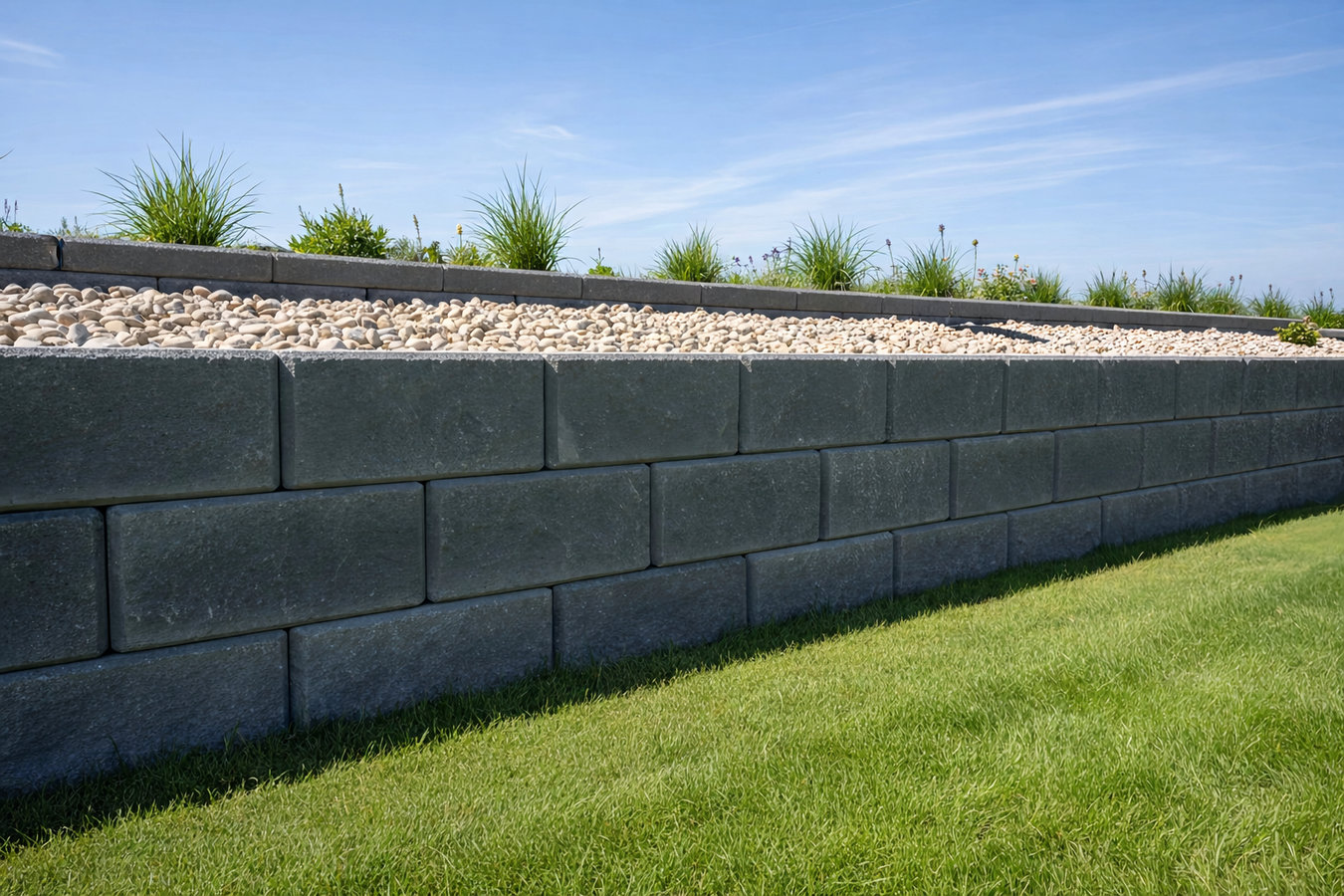
Mill Valley slopes move, saturate, and shake. A concrete block wall built for this terrain handles all three - with seismic reinforcement, proper drainage, and a footing sized for your specific site.
Concrete block walls in Mill Valley involve excavation, a poured concrete footing, block-laying with steel reinforcement inside the cores, grout fill, and drainage installation behind the wall - most straightforward projects take one to three days; taller hillside retaining walls with permit requirements run a week or more, depending on site prep and inspection scheduling.
Retaining walls are not an occasional project in Mill Valley - they are a routine part of how hillside homes manage their land. The combination of steep slopes, heavy seasonal rainfall averaging around 50 inches per year, and seismic activity in Marin County means a concrete block wall here needs to be designed specifically for local conditions, not built to a generic flat-lot standard.
If you are looking to clad a finished wall with a natural stone look, our foundation block wall installation service handles structural below-grade work, while retaining wall construction covers the full scope of hillside soil management.
If soil is washing down your hillside during or after storms, leaving bare patches or depositing dirt onto your driveway or neighboring property, your slope is not being held in place. Mill Valley's steep terrain and heavy seasonal rainfall make this a common problem. A concrete block retaining wall stops the erosion and gives your landscaping a stable base.
A wall that leans forward - even slightly - means the pressure behind it has exceeded what it was built to handle. Horizontal cracks running across the face of a block wall are a more serious warning than vertical ones. If you can see daylight through gaps in the mortar, or sections have shifted, the wall needs professional attention before the next rainy season.
Many Mill Valley yards have terraced levels held by old railroad ties, loose stone, or just compacted soil. These informal solutions tend to fail gradually - and sometimes suddenly. If levels are separating or the upper level feels soft or unstable near the edge, a properly built block wall gives that transition the permanent structure it needs.
If you want to add a patio, garden bed, or flat usable area to a sloped yard, a retaining wall is almost always part of making it happen. The wall creates the level platform the new space needs. Getting a concrete block wall estimate at the same time as your outdoor project saves you from having to redo work later.
Every concrete block wall we build starts with a footing - a poured concrete base buried in the ground that spreads the wall's weight across a wider area of soil so the wall does not sink or tip over time. A footing that is too shallow or too narrow is the most common reason block walls fail, and it is invisible once the wall is built. We size footings based on your specific site - slope, soil type, and wall height - not a one-size-fits-all number. For retaining walls on Mill Valley hillsides, we install steel reinforcement inside the hollow block cores and fill them with grout, so the wall can flex and absorb movement during an earthquake rather than crack apart.
Drainage is built into every retaining wall project. Gravel backfill and perforated drain pipe behind the wall give water somewhere to go instead of building up pressure against the blocks - a critical detail in a climate with 50 inches of annual rainfall. We handle foundation block wall installation for below-grade and structural applications, and retaining wall construction for full hillside soil management projects. Finished walls can be left natural, painted, stuccoed, or faced with stone veneer.
Best for hillside properties where soil erosion, slope movement, or a failing old wall needs a permanent structural solution.
Suited to homeowners who need a durable property line or terraced garden border on a flat or gently sloped lot.
Ideal for projects where the block wall is load-bearing or part of a foundation system, built to seismic standards.
For homeowners who want to clad a new wall with stone veneer or stucco - we build the substrate correctly from the start.
Mill Valley is built into the slopes of Mount Tamalpais, and the majority of residential properties sit on terrain that ranges from gently sloped to dramatically steep. Retaining walls are not an occasional project here - they are a routine part of how homes manage their land. The steeper the site, the more preparation is involved: deeper excavation, more drainage work, and often a taller wall. Steep sites may also require a structural engineer's review before the permit is approved. Marin County's clay-heavy soils add another layer of complexity - clay expands when wet and shrinks when dry, which puts stress on footings that are not set deep enough. A contractor familiar with local soil conditions will account for this in the design.
The Bay Area's seismic activity means block walls here are typically required to include steel reinforcement and grout fill - standard practice in this region, not an upgrade. Walls above a certain height require a permit from Mill Valley's Community Development Department, and in some cases a structural engineer's stamp. We handle permit applications as part of every project, and we work on properties throughout the area, from Novato hillside lots to Corte Madera boundary walls. For permit and seismic standards, we follow guidance from the Portland Cement Association and the Mason Contractors Association of America.
We reply within one business day and visit your property before quoting. Concrete block wall projects vary too much by site - slope, soil, access, wall height - for any honest contractor to quote over the phone. The site visit takes 20 to 45 minutes, and we use it to assess drainage needs and discuss permit requirements.
You receive a written estimate that breaks down labor, materials, and permit fees. We tell you upfront whether your project needs a permit and handle the application. Permit timelines in Marin County can add a few weeks to the start date - we factor this into the schedule from the beginning.
The crew excavates the footing area and removes any existing material - old walls, roots, loose soil - that would interfere with a stable base. The concrete footing is poured and allowed to cure for 24 to 48 hours. If your project requires a permit, a city inspector checks the footing before block-laying begins.
The crew lays blocks in courses, setting steel reinforcement inside the cores and filling them with grout as they go. For retaining walls, drainage gravel and pipe are installed behind the wall at the same time. Once complete, a final inspection is scheduled if a permit was pulled - we coordinate it so you do not have to.
No phone quotes. We visit your property, assess the slope and access, and give you a written price with no obligation.
(628) 257-3020The Bay Area is one of the most seismically active regions in the country, and block walls here are typically required to include steel reinforcement and grout fill. We treat this as standard practice - not an upgrade - because a wall that is not built for where you live is a wall that may not survive the next significant shake.
Mill Valley receives around 50 inches of rain in most years. We install gravel backfill and perforated drain pipe behind every retaining wall so water moves through and away from the blocks rather than building up pressure season after season. This single detail is what separates walls that last decades from walls that start showing stress in a few wet winters.
Most of our retaining wall projects are on steep slopes with limited equipment access, clay-heavy soils, and irregular grades. We know how to handle the access challenges, how deep footings need to go on Marin soils, and how to sequence work efficiently on tight lots. That experience is what you are paying for on a hillside project.
Walls above a certain height in Mill Valley require a permit from the Community Development Department - and for taller walls, sometimes an engineer's stamp. We handle the permit application, coordinate the footing inspection, and schedule the final inspection. A permitted wall is on record and protects you when you sell. Verify contractor licensing through the California Contractors State License Board.
A concrete block wall built correctly from the footing up - with drainage, seismic reinforcement, and a permitted inspection on record - is a wall that holds your hillside, your property value, and your peace of mind through every rainy season and every earthquake the Bay Area delivers.
Below-grade and structural block wall work for foundations and load-bearing applications throughout Mill Valley.
Learn MoreFull-scope hillside retaining wall projects covering excavation, drainage, and structural design for Marin County slopes.
Learn MoreRainy season arrives fast in Marin County - reach out now and we will schedule your site visit before the wet weather queue fills up.