Loading...
Serving Mill Valley, CA and surrounding areas. (628) 257-3020
Custom Mill Valley Concrete & Masonry is a masonry contractor serving Richmond, CA, handling driveway pavers, brick repair, foundation work, and retaining walls across the city's diverse neighborhoods - from the Victorian homes of Point Richmond to the postwar bungalows of the Iron Triangle. We have served Richmond and the broader Bay Area since 2021 and understand the older housing stock, clay soils, and seismic conditions that shape every masonry project in this city.
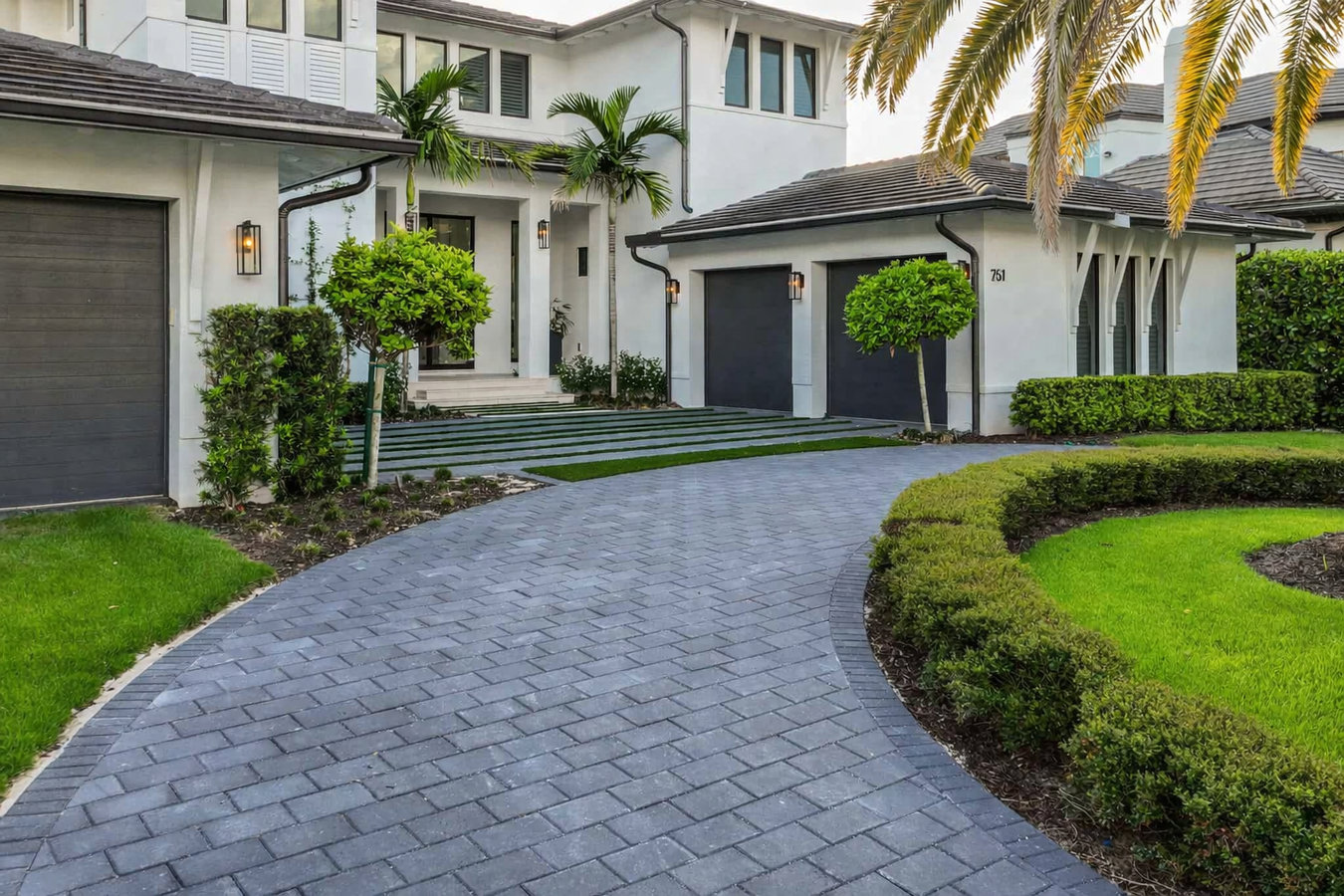
A large share of Richmond driveways were poured in the 1940s and 1950s, and most of them are showing the effects of 70-plus years of clay soil movement, freeze-thaw cycles, and deferred maintenance. Paver installations on these lots replace a surface that cannot be patched indefinitely with one that accommodates future ground movement - individual units can be lifted and reset when the soil shifts, rather than left to crack further each wet season. Learn about driveway pavers.
Richmond's Victorian and Craftsman homes in Point Richmond have brick and block details that require matched repairs - not standard cement patches that stand out against material that has been in place for over a century. Brick repair on these homes calls for mortar composition matched to what was originally used and a mason who understands the difference between cosmetic cracking and structural movement. The wet Bay winters that Richmond gets every year accelerate mortar deterioration on north-facing walls and chimneys.
Many Richmond homes were built before modern seismic codes took effect, with unreinforced concrete or masonry foundations that were not designed for the Hayward Fault activity the East Bay experiences. Clay soils throughout the city also create annual movement that puts stress on foundations regardless of age. Catching cracks and settling early - before water works its way into the foundation assembly through a rainy season - is consistently less expensive than waiting until the problem becomes structural.
Sloped lots in the hillier parts of Richmond - particularly in neighborhoods east of the BART station and toward the Hilltop area - need retaining walls that can handle the hydrostatic pressure that builds up behind them during wet winters. We build with gravel backfill and drain pipes behind every wall, because water management is what separates a wall that holds for decades from one that starts bowing outward after a few rainy seasons.
Richmond's older homes - particularly in Point Richmond and the Iron Triangle - have original masonry chimneys that may not have been inspected since they were built. Failed chimney flashing is one of the most common causes of water intrusion on homes from this era, and damaged mortar joints in older brick chimneys allow water to work inward through every wet season until someone takes a close look at what is actually happening up top.
Original mortar on Richmond homes from the 1940s and 1950s has had 70 or more years to deteriorate, and on homes that have never been repointed, open joints are the primary path for water intrusion into brick and block walls. The Bay fog that rolls in off San Francisco Bay - especially the summer marine layer that keeps Richmond damp even without rain - accelerates mortar breakdown on exterior walls facing the water. We match mortar profile and color to existing work so repairs age consistently with the surrounding material.
Richmond's housing stock is older than almost anywhere else in the Bay Area. A substantial portion of the city's homes were built in the 1940s and early 1950s, during the wartime shipbuilding boom when Richmond's population grew rapidly because of the Kaiser Shipyards. That rapid construction produced homes built to the standards of the era - wood-frame on concrete or masonry foundations, original chimneys, and driveways and walkways poured decades ago. Many of these homes have never had a thorough masonry inspection, and the original materials are showing their age in ways that range from cosmetic to structural. Point Richmond, the historic waterfront neighborhood at the western tip of the city, has Victorian and Craftsman homes from the late 1800s and early 1900s with brick and stone details that require specialized matched repairs rather than standard patching.
The Hayward Fault runs through the East Bay and puts Richmond in an area of genuine seismic exposure. Homes built before 1970 - which describes a large share of Richmond's housing stock - were constructed before modern seismic codes required foundation bolting and cripple wall bracing. That gap in structural preparation is one of the most common reasons we get called to older Richmond properties. The city's clay soils add a second layer of stress: they swell when Richmond's wet winters arrive in November and pull away from foundations when the dry months return in May. That seasonal movement cracks concrete flatwork, stresses mortar joints, and shifts retaining walls in a pattern that repeats year after year on properties that have not addressed the underlying drainage issues.
Our crew works throughout Richmond regularly, and we understand the local conditions that affect masonry and concrete work here. Permit applications for structural masonry work go through the City of Richmond Building Services Division, and we handle that process for every job that requires it. Richmond's neighborhoods are genuinely varied - working in Point Richmond's historic district, where homes have Victorian trim details and original brick foundations, is a different job from a postwar bungalow in the Iron Triangle or a 1980s ranch house up in the Hilltop area. We know the difference and approach each neighborhood accordingly.
Richmond sits on the eastern shore of San Francisco Bay, with the Richmond BART station connecting the city to San Francisco and Oakland. The city's geography runs from waterfront flatlands near Point Richmond and the marina up to the hillier streets of the Hilltop area in the east. Homes closer to the Bay deal with more persistent marine moisture and fog exposure, while properties on the higher ground face more sun but also steeper lots that need retaining walls and proper drainage design. The Rosie the Riveter / World War II Home Front National Historical Park near the waterfront is one of the city's most recognized landmarks and a reminder of the era that produced most of Richmond's current housing stock.
We also serve the communities on either side of Richmond. If you need masonry work in Novato or in nearby San Francisco, those pages cover the conditions and services specific to each of those cities.
Reach us by phone or through the contact form on this site. We respond within 1 business day. A brief description of the issue is all you need - no measurements or photos required to schedule the first visit.
We visit the property, assess what needs to be done, and give you a written estimate before any work begins. We will tell you upfront whether a permit is required and what that adds to the timeline. The estimate is free and there is no pressure to decide on the day.
We arrive on the scheduled start date with the crew and materials the job requires. Most homeowners do not need to be present throughout the day - just reachable by phone if a question comes up. We keep the work area clean as we go.
When the work is complete, we walk through everything with you and answer any questions about the finished job or what to watch for going forward. If permits were pulled, we coordinate the final inspection. The work area is cleaned before we leave.
We work throughout Richmond and respond to all inquiries within 1 business day. No obligation, no pressure.
(628) 257-3020Richmond is a city of about 115,000 residents on the eastern shore of San Francisco Bay in Contra Costa County. It is one of the more historically significant cities in the Bay Area - Richmond grew rapidly during World War II because of the Kaiser Shipyards, which at their peak employed tens of thousands of workers building Liberty ships. That wartime growth produced most of the housing stock that still defines the city today: bungalows and ranch houses built quickly in the 1940s and 1950s for workers and their families. Point Richmond, at the western tip of the city, is a separate and older character entirely - a historic waterfront neighborhood with Victorian homes, Craftsman bungalows, and a small-town feel that stands apart from the rest of the city. You can read more about Richmond's history and neighborhoods on Wikipedia.
The city's neighborhoods span a wide range of terrain and building eras. The Iron Triangle near downtown is a dense residential area with a high concentration of older single-family homes and duplexes. The Hilltop area in the eastern part of the city has newer housing from the 1970s and 1980s, with larger lots and more suburban character. North Richmond and the areas closer to the waterfront have some of the oldest and most in-need-of-attention housing stock. The Richmond BART station connects the city to San Francisco and Oakland, making it a practical base for commuters. Nearby, Berkeley is just south along the Bay, with its own distinct mix of older homes and masonry needs. We serve both cities and understand how the conditions in each compare.
Install block foundation walls built to code and last decades.
Learn MoreBuild a durable masonry outdoor kitchen for year-round entertaining.
Learn MoreCall us or send a message and we will get back to you within 1 business day with a free, no-obligation estimate for your Richmond home.